

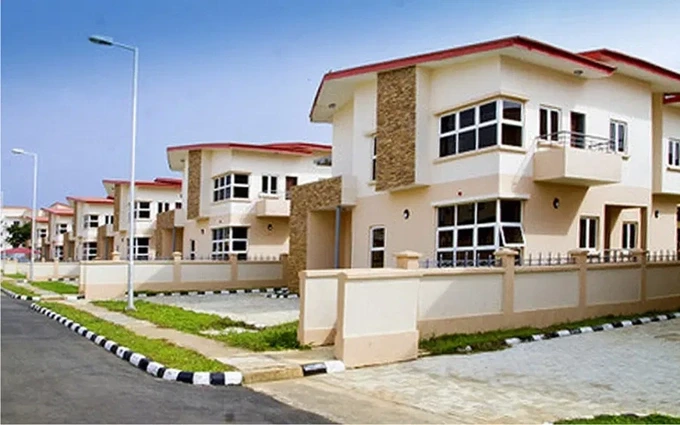
Nigerians are increasingly expressing frustration over soaring apartment rents in major cities, where two-bedroom flats now cost far beyond the reach of average earners.
In Lagos neighborhoods such as Lekki and Surulere, annual rents for two-bedroom apartments now average ?1.5 million to ?4 million, with upfront payments and agent fees pushing totals to ?2.5 million–?6 million.
These figures dwarf the national minimum wage of ?70,000 per month and exceed the average yearly salaries of ?2.75–?3.4 million. Sudden 50–70% rent hikes are forcing families to seek concessions, relocate to villages, or share accommodations.
The shortage of housing—estimated at 15–20 million units nationwide—has compounded the crisis, with critics blaming landlords, agents, and market manipulations for inflating demand.
Citizens are calling for rent caps, improved transportation links, and increased housing construction to alleviate pressure, even as the federal government’s housing strategy seeks to address the deficit.
The issue has sparked widespread conversation on social media:
@_ellaru tweeted: “A salary of 200k which is 2.4M a year can’t get you a good apartment on the mainland still. And that’s if you keep the entire salary without spending out of it.”
@Morris_Monye noted: “I believe the Lagos rent bubble will burst soon. Lagosians simply don’t earn enough to afford such rent.”
@lanreadelowo added: “We need more housing in Lagos tbh. Like an awful lot more. Seeing people work all year round and struggling to meet up with rent is insane…”
@thatguytelvin commented: “It’s becoming abnormal at this point! If you want a really comfortable apartment in Lagos now you must have millions of naira… after the first year they move out. This is not life tbh.”
@callmetobiloba wrote: “Lagos landlords will swear they don’t want to rent out their houses to fraudsters and go ahead to charge exorbitant house rents that people with decent and doing legal jobs cannot afford.”
@Nedumcity_ shared his experience in Abuja: “I was told my 1.5m can’t get me a 2 bedroom empty apartment in Wuse. I was told to come with 3m. After paying, I will still pay crazy agency, legal and caution fee that adds another 20–30% on top.”
With urban housing costs rising sharply, many Nigerians are struggling to keep up, fueling debates over affordability, fairness, and the urgent need for government intervention.
Lagos govt accused of ignoring crisis – Expert
Founder of Fair Housing, Ayodele Adio, on Tuesday accused the Lagos State government of failing to respond to the deepening housing crisis, warning that working and middle class residents are being pushed out of the market by soaring rents and unchecked luxury developments.
Speaking during an interview on ARISE News, Adio said the government’s response does not match the severity of the problem.
“To be fair, there has been no response at all, let me be quite honest with you, and I find this a fundamental betrayal of this generation, especially my generation,” he said.
Adio argued that housing in Lagos has shifted from being a public good to a tradable commodity, a change he attributed to the priorities of successive administrations.
“There has been a fundamental shift from how the current administration, because it’s a party that has been in office for the last 24 years, has viewed our housing away from public good into a commodity that you can solely trade.”
He stressed that the crisis is no longer limited to low-income earners, with working and middle-income households now bearing the brunt of rent increases.
“The reality is that working and middle income people are now having the short end of the stick without an ability to cope with the rent hikes, and are living at a time where it becomes almost impossible for people in my generation to own a home in Lagos State.”
Adio criticised the focus on public-private partnerships, which he said largely benefits luxury housing while excluding most residents.
“They have focused exclusively on public private partnerships that drives exclusively luxury housing across the state, and has sort of excluded a majority.”
Describing the situation as a betrayal by a political class that previously benefited from social housing, he warned of wider social consequences.
“We are likely leading to that situation again, at a time where there’s a sense of hopelessness around young people, seeing that all of their income has to go into just spending on food, electricity and housing, and are incapable of doing anything else. Property, land and property, is the most important engine for wealth creation and prosperity. And when you exclude people out of that, what you have done is to remove the ladder upon which they are supposed to climb.”
Adio also highlighted the contrast between struggling residential markets and growing luxury developments, noting that many high-end properties remain unoccupied as part of speculative global investment.
He proposed measures such as rent caps tied to inflation, stricter regulation of short-term rentals, and mandated affordable units in luxury developments.
He concluded that resolving the crisis requires political will and policy-driven solutions.