

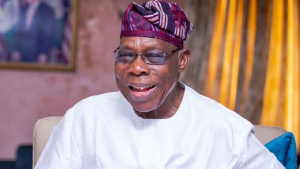
Former President Olusegun Obasanjo has stated that Nigeria’s fight against Boko Haram insurgency has dragged longer than the country’s 1967–1970 Civil War...READ FULL; ORIGINAL POST; FROM SOURCE.
Obasanjo made the remark on Sunday during the Toyin Falola Interviews conversation, which was live-streamed on social media and featured other panelists including Catholic Bishop of Sokoto Diocese, Matthew Kukah, and former Deputy Central Bank Governor, Kingsley Moghalu.
Speaking on Nigeria’s insecurity challenges, the former president stressed that ending insurgency requires a strategic mix of specialised training, modern equipment, reliable intelligence, and advanced technology.
Obasanjo said there was nothing wrong with Nigerian military personnel receiving training from countries that have successfully tackled insurgency, citing Colombia as an example.
“There are four important items and I hope that those who are in charge — military, executive and legislature — know what they are doing,” Obasanjo said.
According to him, conventional military training is not sufficient to deal with insurgents who operate as fleeting targets or blend with civilian populations, insisting that specialised training was necessary.
He also warned that the wrong approach to procurement and intelligence sharing could undermine the fight, stating that military equipment purchasing should not be left solely to the armed forces.
“The whole thing is an industry. It is an industry,” he said.
Drawing from his experience handling the Niger Delta militancy, Obasanjo said he would not rule out the possibility of collusion between security personnel and insurgents.
“Civil war lasted for 30 months. Although we thought it would last for six months. But this fight against insurgents and criminals has lasted for almost 15 years,” he stated.
Obasanjo also revealed that he visited Maiduguri in 2011 to understand the origin, grievances and leadership structure of Boko Haram.
He disclosed that the insurgents initially refused to negotiate with the Federal Government but later agreed to a 21-day ceasefire for dialogue, which reportedly failed after the government did not adequately reach out to their leaders.