

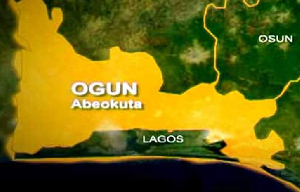
After the Atijere community of Ondo State laid claim to Eba Island, two neighbouring towns in the Ogun Waterside Local Government of Ogun State, Ode-Omi and Makun Omi, have laid rival claims to the coastal location reportedly approved by the Federal Government for commercial crude oil exploration, deepening the custodianship dispute in the oil-rich village.
Ode Omi and Makun Omi are neighbouring communities in the Ogun Waterside Local Government Area of Ogun State.
The dispute emerged in the wake of the Federal Government’s approval of oil drilling in Ogun’s coastal belt, announced by the Ogun State Government as part of President Bola Tinubu’s Renewed Hope Agenda aimed at expanding Nigeria’s oil production frontier.
Initial excitement over the development has given way to tension following conflicting ownership claims by traditional institutions within the Ijebu Waterside area, with both Ode Omi and Makun Omi asserting ancestral rights over Eba Island.
In a letter dated January 28, 2026, and addressed to Governor Dapo Abiodun, the Ode Omi Kingdom formally protested claims to Eba Island by Oba Oshobia of Makun Omi, warning that failure to clarify ownership could trigger communal unrest.
The letter, signed by the Balogun of Ode Omi Kingdom, Prince Shittu Adeyemi, expressed appreciation to both the governor and President Tinubu for facilitating the oil project but cautioned that the emergence of rival claims threatens stability in the Ijebu Waterside area.
According to him, Eba Island has historically belonged, since time immemorial, to the Lenuwa ruling houses of the Ode Omi Kingdom, specifically the Ojafoyewa and Ojagbuwa royal families, alongside other ancient families of the community.
Adeyemi said historical records and settlement patterns show that inhabitants of Eba villages trace their ancestry to Ode Omi and maintain family houses in the kingdom, adding that former Baales of Makun Omi traditionally acknowledged the authority of the Lenuwa of Ode Omi.
The community argued that the recent claim by Makun Omi only surfaced following the oil discovery, describing it as an attempt to challenge long-established custodianship after the commercial viability of the area became public knowledge.
“We wish to state clearly that Eba Island had belonged to the ruling houses of Lenuwa of the Ode Omi Kingdom and other ancient Ode Omi families from Ode Omi communities. Precisely (Ojafoyewa and Ojagbuwa Royal Families) of Lenuwa of Ode Omi Kingdom since time immemorial. Historically, they reside in Eba Island and other Eba villages around the boundaries with Irokun Town, a neighbouring community to the Ode Omi Kingdom.
“In the 17th and 19th centuries, two among the King Lenuwa of the Ode Omi Kingdom, precisely Lenuwa Ojafoyewas, were born and brought up in Eba villages. Prior to installation as a Ruler of Ode Omi, all the people of Ebas had had their family houses in the Ode Omi Kingdom from time immemorial.
“The past Baale of the Makun Omi community have traditionally acknowledged the authority of King Lenuwa of the Ode Omi Kingdom. We are therefore concerned by recent claims by Oba Oshobia of Imakun Omi in a letter dated 24th of January 2026 claiming ancestral ownership of Eba Island for crude oil drilling,” the letter partly read.
While maintaining support for oil exploration, Adeyemi urged the Ogun State Government and the Federal Government to intervene urgently and set up an impartial investigation involving relevant state agencies and the Ogun State Council of Traditional Rulers to verify historical and customary records. This, he said, became necessary to avoid escalation.
“We, the people of Ode Omi Kingdom, call on President Bola Tinubu and the governor of Ogun State to intervene promptly to prevent communal disorder. We request a calm, transparent investigation by relevant state authorities and the State Council of Traditional Rulers and Chiefs to verify historical records and the aboriginal customary practice of the people of Eba, because it is clearly documented that all areas, towns, and villages are owned by every Oba in the Ijebu traditional council from time immemorial.
“Ode Omi is a peaceful community that maintains good relations with neighbouring communities as the recognised and the Paramount Ruler in the Ijebu Waterside and a foundational king in Ijebu land.
“King Lenuwa of Ode Omi Kingdom, Oba Folailu Adekunle Hassan (Oshotekun II), the Lenuwa, did not share Eba Island with any traditional ruler in Ilaje communities in Ondo State; the first traditional ruler, Oba Amapetu of Mahin Kingdom, then the paramount ruler of Ilaje land, was settled after the reign of the 11th Lenuwa of Ode Omi Kingdom. Lenuwa has been the first traditional ruler in the whole Ijebu land after him and his younger brothers, Repaa, the Liken of Iwopin Kingdom, and Ogbogbonida, who later became the first Awujale of Ijebu Ode.
“At that time, there was no Oba in the whole of Ijebus, including the coast and inland. Oba Lenuwa will continue to play a fatherly role; we urge all parties to pursue dialogue and legal avenues rather than confrontation so the matter can be resolved amicably and the peace of the area preserved for all,” the letter concluded.
Earlier, Makun Omi insisted that Eba Island falls within its traditional territory. The position of Makun Omi had earlier been amplified through statements attributed to its monarch, Oba Kazeem Salami, who commended Tinubu for approving oil exploration in Eba Island, describing the development as a major breakthrough for coastal communities in the state.
Salami said the commencement of commercial drilling in the area would ensure inclusivity, create economic opportunities, and empower Makun Omi and neighbouring communities, while also assuring the government of a peaceful environment for oil operations.
Beyond the intra-Ogun dispute, the oil discovery has also drawn in external claims, further complicating the situation.
The Molokun of Atijere Kingdom in the Ilaje Local Government Area of Ondo State, Oba Samuel Adeoye, has publicly declared that Eba Island belongs to Atijere and not to any community in Ogun State.
Adeoye said documents exist to support Atijere’s claim and warned that his people would resist any attempt to carry out oil exploration on the island without their consent, insisting that the oil-bearing location falls within Ondo State territory and even inside the Ondo State Forest Reserve.
Reacting to the claims by the Ondo monarch, the Ogun State Government dismissed assertions that Eba Island lies outside Ogun, insisting that the oil exploration site is located within the Ogun Waterside Local Government Area.
The Special Adviser to Governor Abiodun on Media and Strategy, Kayode Akinmade, said official maps and long-standing studies confirm Eba Island as part of Ogun State, adding that oil exploration falls under the exclusive jurisdiction of the Federal Government.
According to him, if Ondo State had a valid claim to the oil-bearing area, it would have been involved in the federal process that led to the approval of drilling.
The contest over Eba Island highlights deeper boundary ambiguities along the Ogun–Ondo coastal corridor, where historical migration, fishing settlements, and traditional allegiances have often blurred administrative boundaries.
With crude oil now at stake, stakeholders fear that unresolved ownership claims could delay exploration activities, heighten communal tension, and complicate federal efforts to bring new oil assets on stream.
While communities in Ogun’s Ipokia and Ogun West protested the “change” of location from Tongeji to Eba Island, the development has since opened a wider contest involving traditional rulers and communities in Ogun Waterside and the Ilaje Local Government Area of Ondo State.